

Stay informed
Subscribe for the BDI Newsletter & Updates
Contacts
contact@burundidi.org
chairman@burundidi.org
+257 79 92 60 67 / +1 (310) 415-7827
Leave a message
EMAIL FORM

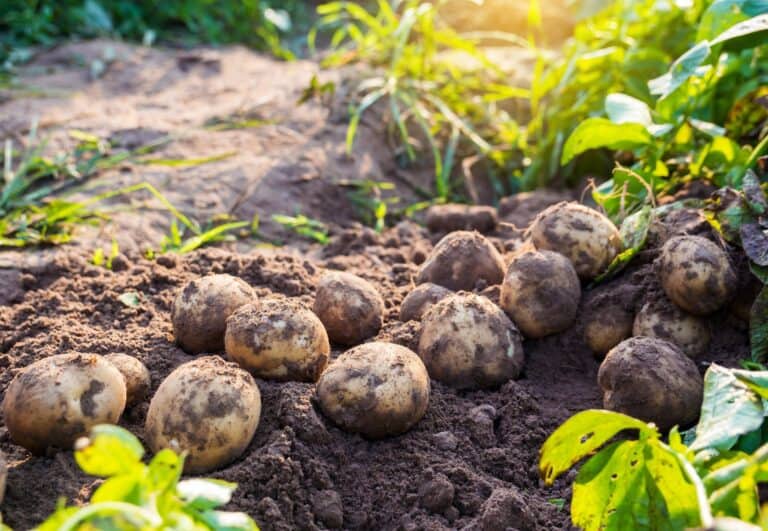
In the Mukike region, potato cultivation has gradually taken hold. This staple crop is now a source of pride for households. Once marginal, it now dominates the local economy to such an extent that it is transforming the landscape of the region. This success has not gone unnoticed by the highest authorities of the state. Today, the potato is no longer simply a tuber. It has become the beating heart of this transformation, the discreet gold of the verdant hills of Mukike, one of the pillars of its development.
Mukike, perched high in the mountains, was once known more for its cattle ranching than its agriculture. Today, its landscape is undergoing a transformation: the mountain slopes, once forested, have given way to vast green expanses of potato fields. Where corn and wheat once reigned supreme, the potato was merely a humble guest, cultivated only to fill family cooking pots.
But the tide has turned. The compass of rural destiny has shifted, and the inhabitants have embraced the entrepreneurial spirit as one might grasp a new light. In Mukike, the very soil now seems to whisper a call to revolt against hunger, and the attentive population has risen to answer that voice. The potato has become the king of crops, crowned by the inhabitants, reigning supreme on the conquered hills, a symbol of an ever-growing ambition.
Serges, a young entrepreneur from Mayuyu, recounts how he built his fortune thanks to this now highly sought-after crop: “In 2019, after completing my studies as a construction foreman, I decided to start growing potatoes with very limited capital. Today, I can only be proud of it: I now cultivate nine and a half hectares of potatoes, as well as two hectares of corn.” Other testimonials abound. One farmer also confides that potatoes have become a real source of income for his family, allowing them to meet their needs with dignity: “In recent years, I only grew potatoes on a few acres, solely for family consumption, even though I had about four hectares. One day, a friend suggested we start together: he would provide the manure and seeds, and I would bring the chemical fertilizer and the land. The idea seemed reasonable to me, so I agreed.” "Today, thanks to the success of this collaboration, I earn five million with each harvest ," he concludes.
Potato cultivation, as capricious as a queen, demands significant resources to produce a good yield. Each plot becomes a demanding cradle, requiring patient care. Labor, precious as gold, weighs heavily on the shoulders of the farmers. To nourish the soil, they apply high-quality manure, sometimes imported from Imbo. The seeds are sorted with the delicacy of a jeweler selecting gemstones, keeping only those with the highest potential. All these expenses, as substantial as they are unavoidable, are seen as a necessary gamble. Serges confirms this: "A few years ago, cultivating one hectare cost a maximum of five million Burundian francs in seeds, chemical fertilizers, labor, and so on. Today, the same hectare swallows up twelve million Burundian francs."
While potato farming feeds families and fills pockets, there are also downsides. Mountains, once crowned with trees, are sometimes stripped bare, sacrificed on the altar of profitability. Those who own vast tracts of land offer higher daily wages to attract workers, to the detriment of those who do not. This explains the fluctuations in the cost of agricultural labor. This increase could well lead to a "wage-price spiral ," the Keynesian economic mechanism where prices chase wages.
Faced with these abuses, the local administration has every interest in putting safeguards in place, by setting a fair daily wage so that the less fortunate do not lack labor. It is also important for them to remind the population that every tree felled must be replaced, because deforestation is not just a scar on the hillside, it is a disfigurement that taints the future of Mukike.
