

Stay informed
Subscribe for the BDI Newsletter & Updates
Contacts
contact@burundidi.org
chairman@burundidi.org
+257 79 92 60 67 / +1 (310) 415-7827
Leave a message
EMAIL FORM
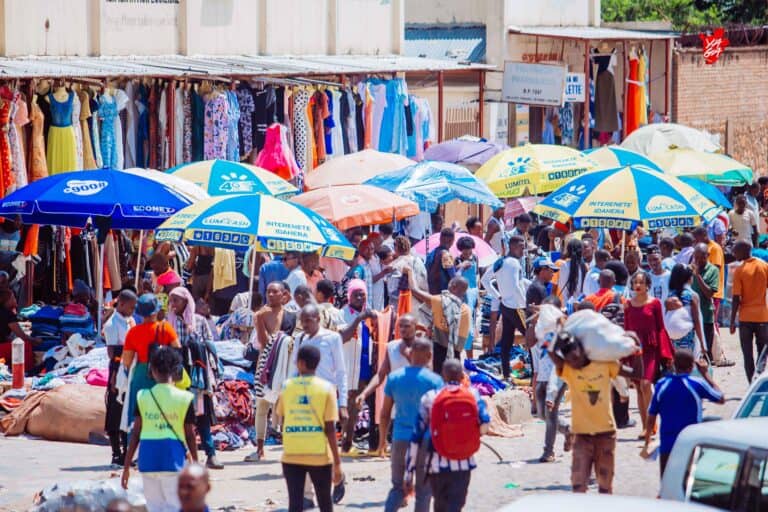
7.7 million registered users, a 140% growth rate between 2019 and 2023, 4 trillion Burundian francs in transactions, and a financial inclusion rate of 78.7%. Only 19.7% formal banking penetration. These are the figures for mobile money in Burundi. Two operators dominate the market: Lumicash (Viettel/Lumitel) and Ecocash (Econet Wireless). Lumitel alone has 43,000 vendors across 25,000 points of sale nationwide.
This expansion comes at a time when the banking sector, despite a 24.4% growth in its net product in 2024, is facing structural challenges: non-recovery of loans, foreign currency liquidity problems and difficulties in recovering debts from the State.
Mobile money has enabled a record financial inclusion rate of 78.7%. Rural populations, traditionally excluded from the banking system, can now conduct transactions from their villages. A farmer in Kayanza receives payment for his harvest instantly, without traveling dozens of kilometers.
“Before, I had to spend a whole day at the bank. Now, with my phone, everything is done in minutes,” says Désiré Niyonkuru, a shopkeeper in Gitega. Mobile money works even on the most basic phones, with menus in Kirundi. Users can transfer money, pay bills, buy phone credit, and make purchases 24/7.
The sector has generated thousands of jobs, particularly for young people and women. Mobile money agents have become key economic players. The BRB has also approved a system allowing investment in Treasury bonds starting at 5,000 FBU via mobile money.
From a macroeconomic perspective, mobile money enhances the multiplier effect of currency. With over 4 trillion Burundian francs (FBU) passing through these platforms, this money can be mobilized by banks to finance productive projects, thereby stimulating the economy.
Is mobile money a threat? Some studies highlight important nuances. Mobile money accounts are becoming veritable current accounts, diverting deposits that would otherwise have been held in banks. Bill payments and transfers, sources of bank revenue, are now being carried out massively via mobile money.
Mobile money operators offer services similar to those of banks (receiving and sending funds, payments, credit) without being subject to the same regulatory constraints. This asymmetry creates, according to some banks, unfair competition. It is worth noting here that the development of mobile banking is more often driven by traditional banks themselves.
January 2023: The Ecocash system was paralyzed following the seizure of its accounts by the OBR for a debt of over 88 billion Burundian francs and 44 million US dollars. Thousands of users were left without access to their money for weeks, revealing the system's fragility.
January 2022: A controversy erupted over fees when Ecocash and Lumicash increased their charges and reduced agent commissions by 30%. The BRB had to intervene to suspend these new fees.
Despite a mobile penetration rate of 64% in Burundi, only 17.3% of Burundians actively use their mobile money accounts , revealing a significant digital divide. This situation is exacerbated by stark geographical disparities, with rural areas remaining underserved in terms of electricity, network coverage, and agent density. The gender gap also poses a major challenge, with women, particularly in rural areas, being significantly underrepresented among active users. Furthermore, the majority of users limit themselves to basic use of the service, focusing solely on money transfers and neglecting the available advanced features.
Industry players are gradually recognizing the potential for complementarity. Banks can reach the 80% of unbanked Burundians through partnerships with mobile money operators, without incurring the costs of opening physical branches. Several banks have already developed such partnerships.
Competition from mobile money is pushing banks to innovate: e-banking, mobile applications, and digital payment services. This competition benefits consumers, who have a wider range of financial solutions at their disposal.
Therefore , to accelerate financial inclusion in Burundi, several priority actions are essential: operators must improve the stability of services and strengthen the security of their platforms, while banks should develop strategic partnerships and actively target unbanked segments of the population. Regulators have a responsibility to establish a balanced framework that harmonizes requirements among the various actors in the sector, and the government must develop a comprehensive digital economy strategy while promoting financial literacy among the population.
